That morning, the courtyard of Sanggar Wayang Nur Cahyo in Sleman Regency echoed with the laughter of children running excitedly from one corner to another. Dressed in traditional Javanese-inspired attire, they eagerly prepared to immerse themselves in a cultural experience unlike anything they had encountered before.
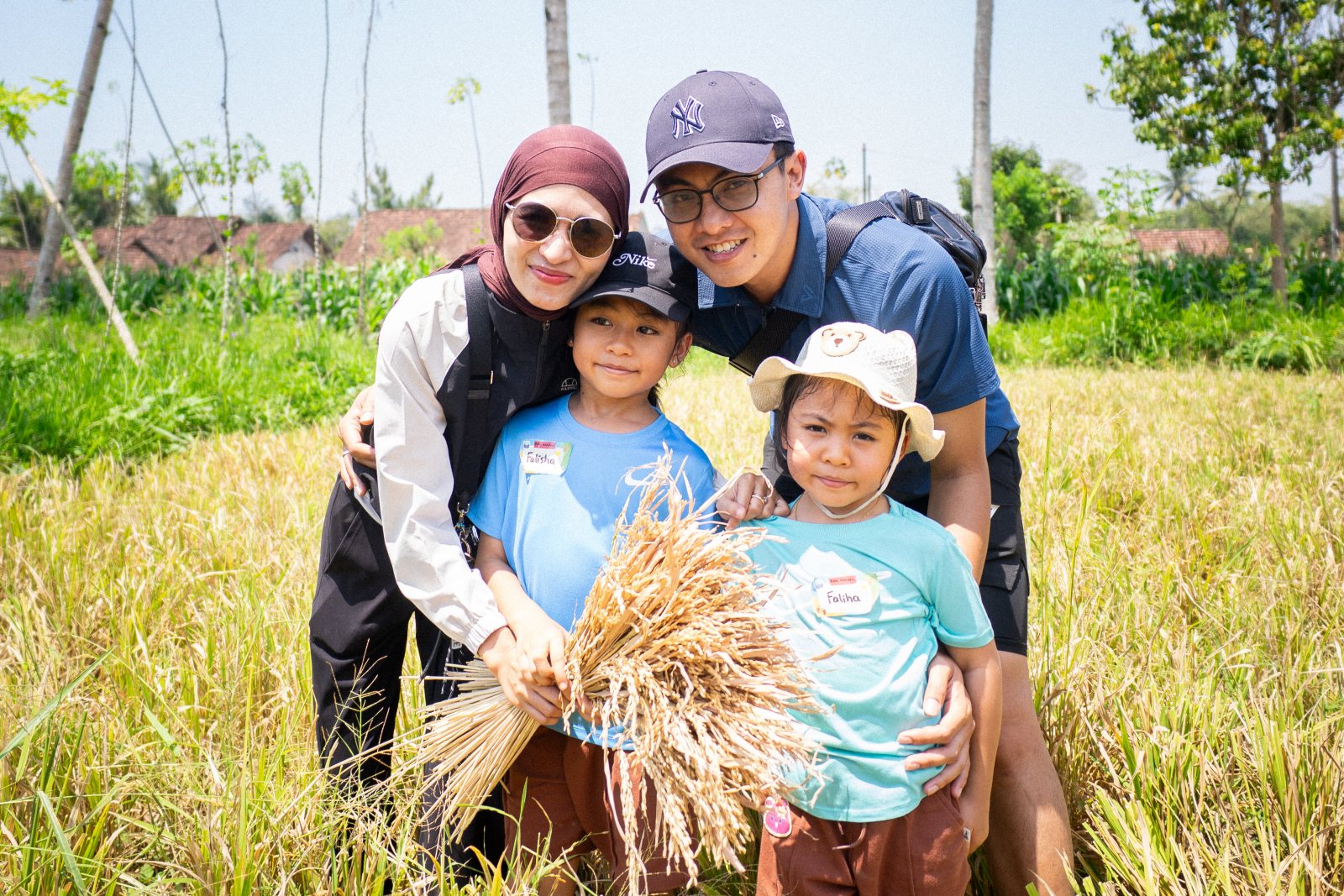
Nearby, parents watched with proud smiles, capturing the joyful moments as their children eagerly anticipated the day’s adventure. This time, Insan Wisata Kids invited families on a unique educational journey—learning the art of gamelan and wayang (traditional Javanese shadow puppetry) directly from respected cultural masters.
For us, travel is about more than simply having fun. It is an opportunity to learn, discover, and grow—especially for children. As a child-friendly tour operator, Insan Wisata Kids encourages children and parents to develop a deeper appreciation for culture, the environment, and the importance of becoming responsible travelers. Through a variety of immersive educational trips, the organization hopes to inspire every journey to create positive value for both local communities and the environment.
Amid the warm and welcoming atmosphere, Reza Nurdiana, Founder of Insan Wisata Kids, stood before the participants with an enthusiastic smile.
“Culture is a reflection of who we are. Preserving our cultural heritage is not only the responsibility of parents or artists—it is a shared responsibility, including that of our children. Today, we are not simply here to play and have fun; we are here to learn how to appreciate and care for the legacy that has been passed down to us. Let us experience every note of the gamelan, every movement of the wayang, and every story preserved within these remarkable art forms. Thank you to all the parents for bringing your children to join this Insan Wisata Kids educational trip.”
With those inspiring words, the cultural adventure officially began.
Introducing Javanese Culture Through Movement and Music
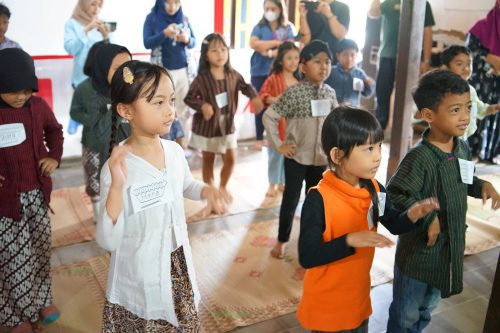
Before learning to play the gamelan and explore the art of wayang, the children were invited to dance to traditional Indonesian folk songs. Led by Reza Nurdiana, this lively opening activity was designed to help the participants feel relaxed, cheerful, and excited for the day’s cultural adventure. The parents enthusiastically joined in as well, swaying and dancing alongside their children, creating a warm and joyful atmosphere.
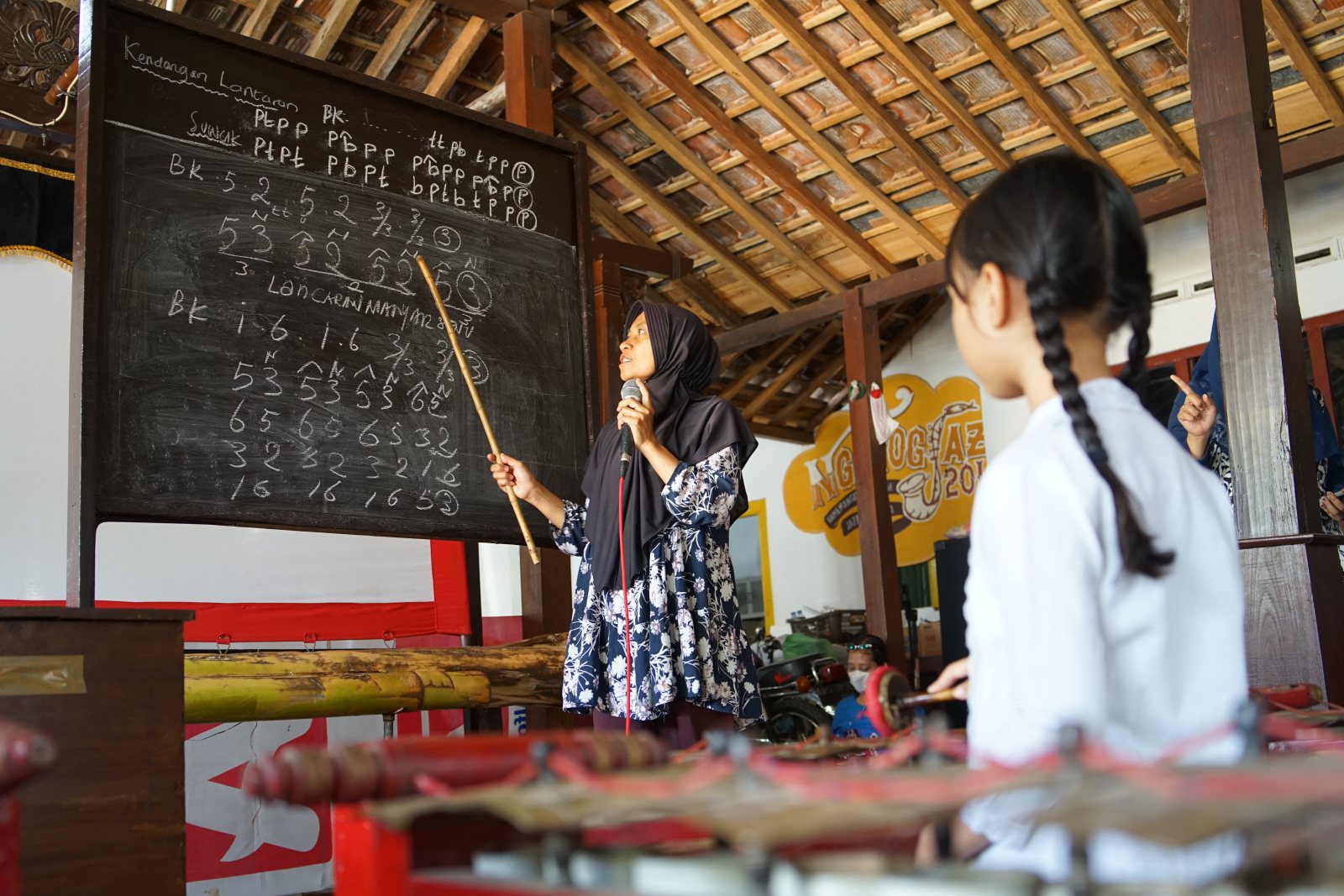
The children were then introduced to the world of gamelan by the owners of Sanggar Wayang Nur Cahyo, Mbah Dar and Bude Eni—two respected maestros who have dedicated many years to preserving the art of Javanese gamelan. They explained the names of the different instruments, their individual roles within the ensemble, and the proper techniques for playing them. To make the lesson easier to understand, they repeatedly demonstrated the basic melodies and rhythms.
After the introduction, the children had the opportunity to play the gamelan themselves under the patient guidance of Mbah Dar and Bude Eni. Many parents joined their children during the activity, creating meaningful interactions and strengthening family bonds. It became a wonderful reminder that educational travel can bring families together, encouraging them to learn, communicate, and create lasting memories side by side.
As the gamelan ensemble played its first notes, the deep resonance of the gong filled the pavilion with a powerful and almost spiritual atmosphere. Parents watched in amazement as their children became part of the performance. Within just a few minutes, Mbah Dar and Bude Eni had successfully taught the group to perform a simple song accompanied by the gamelan orchestra. With remarkable patience, they guided each child through every note. The sounds of the saron, kendang, bonang, and gong blended together in beautiful harmony, giving the children their first unforgettable experience of making traditional Javanese music.
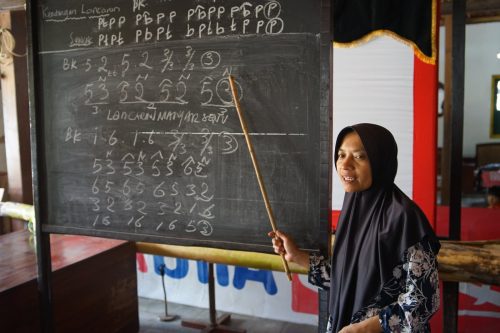
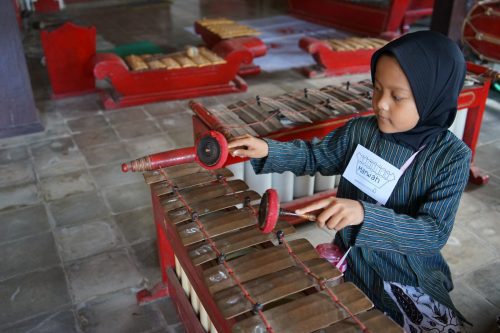
Parents also played an active role throughout the session, gently guiding their children’s small hands as they learned to strike each instrument with the correct rhythm. Some children were hesitant at first, while others quickly began to recognize the melodic patterns. For many parents, it was a heartwarming moment to watch their children confidently embrace something new while discovering their own cultural heritage in such an enjoyable way.
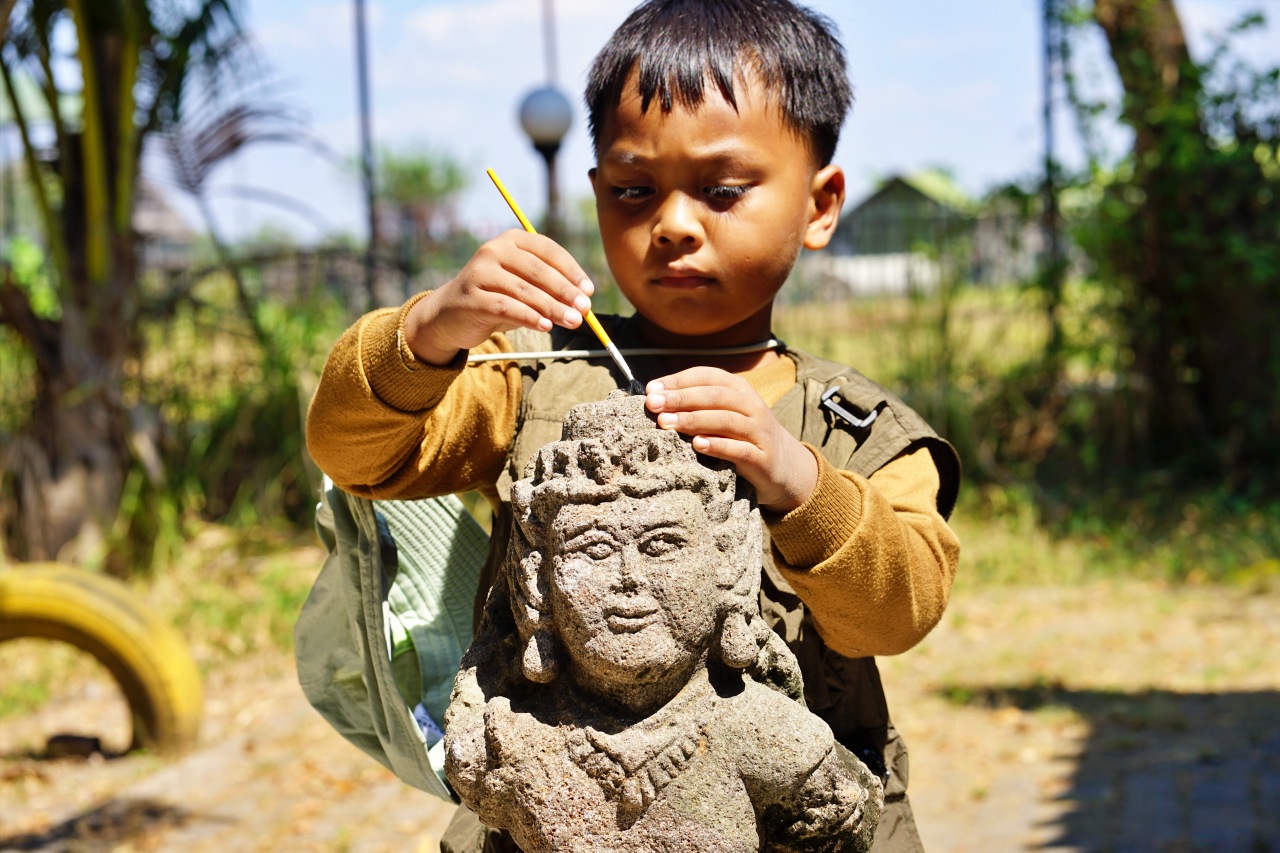
Beyond playing the gamelan, the children were also encouraged to express their creativity through a wayang gunungan coloring activity. The gunungan, a symbolic element representing the universe and the cycle of life in traditional wayang performances, became each child’s canvas as they freely explored their imagination with colors of their own choosing.
Becoming Young Puppeteers and Discovering Wayang Characters
The wayang education session became one of the highlights of the day. Mas Pandu, a talented young puppeteer (dalang), captivated the children by performing an exciting battle between traditional wayang characters. They watched in fascination as stories came to life through the graceful movements of the puppets.
“Take a look at this. Does anyone know who this character is?” asked Mas Bayu, holding up one of the wayang figures.
The children eagerly raised their hands, whispering their guesses to one another. Moments later, the short performance began. The lively movements of the puppets, combined with the distinctive voice of the puppeteer, created an almost magical atmosphere. The children’s eyes remained fixed on the stage as they became completely absorbed in the story unfolding before them.
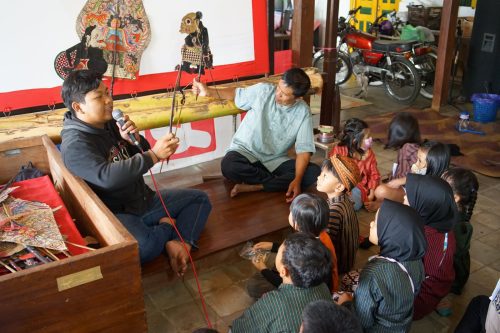
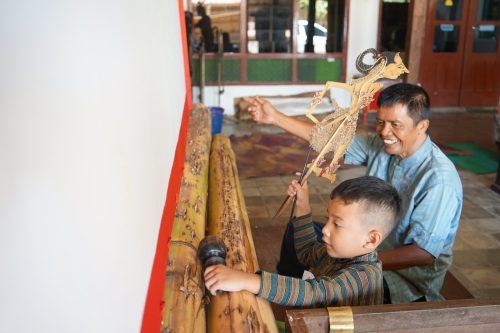
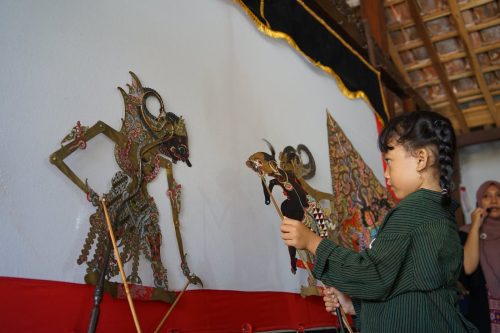
One of the most anticipated moments of the day had finally arrived—the opportunity to become young puppeteers. One by one, the children were invited to hold a wayang puppet and try bringing it to life through movement. Some approached the challenge shyly, while others confidently imitated Mas Pandu’s expressive performance. A few even had the chance to play the keprak, the traditional wooden percussion instrument used by a puppeteer to signal dramatic moments during a wayang performance. Laughter and enthusiastic applause filled the pavilion as parents cheered on every child who stepped forward.
Transforming Travel into a Meaningful Learning Experience
As the session came to a close, the children gathered together, proudly carrying home their colorful wayang gunungan artwork along with unforgettable memories. They had not only learned about gamelan and wayang, but had also discovered the values of courage, patience, creativity, and togetherness through every note they played and every movement they performed.
This experience reflects the core philosophy of Insan Wisata Kids: Exploration as Education. The organization believes that travel should be more than recreation—it should be an opportunity for children and families to learn, grow, and build meaningful connections with culture, people, and the world around them.
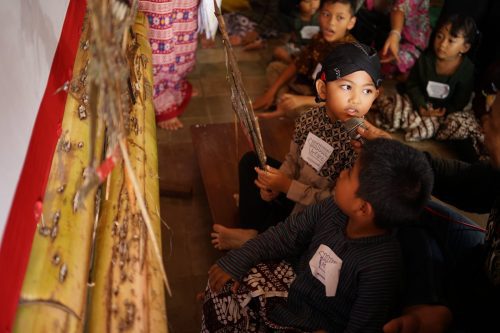
Through immersive experiences such as cultural educational trips, children come to understand that cultural heritage is not something outdated—it is a living legacy that they can appreciate, preserve, and carry forward. Parents also discover that introducing culture to their children does not have to rely solely on textbooks or classroom lessons. Meaningful, hands-on experiences often leave the deepest and most lasting impressions.
As parents, we play a vital role in shaping the way our children view travel. By embracing responsible and mindful tourism, we not only help preserve local culture and the natural environment, but also nurture a generation that is more aware of its surroundings and committed to protecting them.
Did You Know? The Sensory Benefits of Cultural Educational Trips
One of the most valuable outcomes of this educational trip is the rich sensory stimulation it provides. While playing the gamelan, children develop hand–eye coordination, strengthen their fine motor skills, and learn rhythmic patterns that support memory and concentration.
Touching the traditional musical instruments, coloring the vibrant wayang gunungan, and listening to the unique melodies of the gamelan and the expressive sounds of a wayang performance all stimulate their senses in different ways. Together, these experiences contribute to children’s cognitive, emotional, and sensory development—making learning both engaging and enjoyable.