Have you ever asked your child where the rice on their plate actually comes from? Every day, children enjoy rice, vegetables, fruits, and many other foods, but they do not always know the long journey behind what they eat.
For most families, rice is a familiar part of everyday life. It is there at breakfast, lunch, and dinner, often appearing on the dining table as if it has simply always been there.
But before rice becomes a meal, there is a long process behind it. There is soil to prepare, water to support the crops, farmers who start working early in the morning, seeds that need to be planted and cared for, and rice plants that eventually have to be harvested and processed.
What if children were not only told about this process, but also given the opportunity to see, touch, try, and experience it for themselves? This is where agricultural education for children can become a meaningful and engaging learning experience.
Learning About Agriculture Is More Than Just Planting
When we think about agricultural activities for children, we may imagine planting seeds or playing with soil. But a learning experience in a rice field can teach children much more than simply how to grow a plant.
Children can observe how soil provides a place for plants to grow, understand the importance of water and sunlight, and discover that plants need time to develop. They also begin to realize that the food they enjoy every day does not simply appear on the dining table.
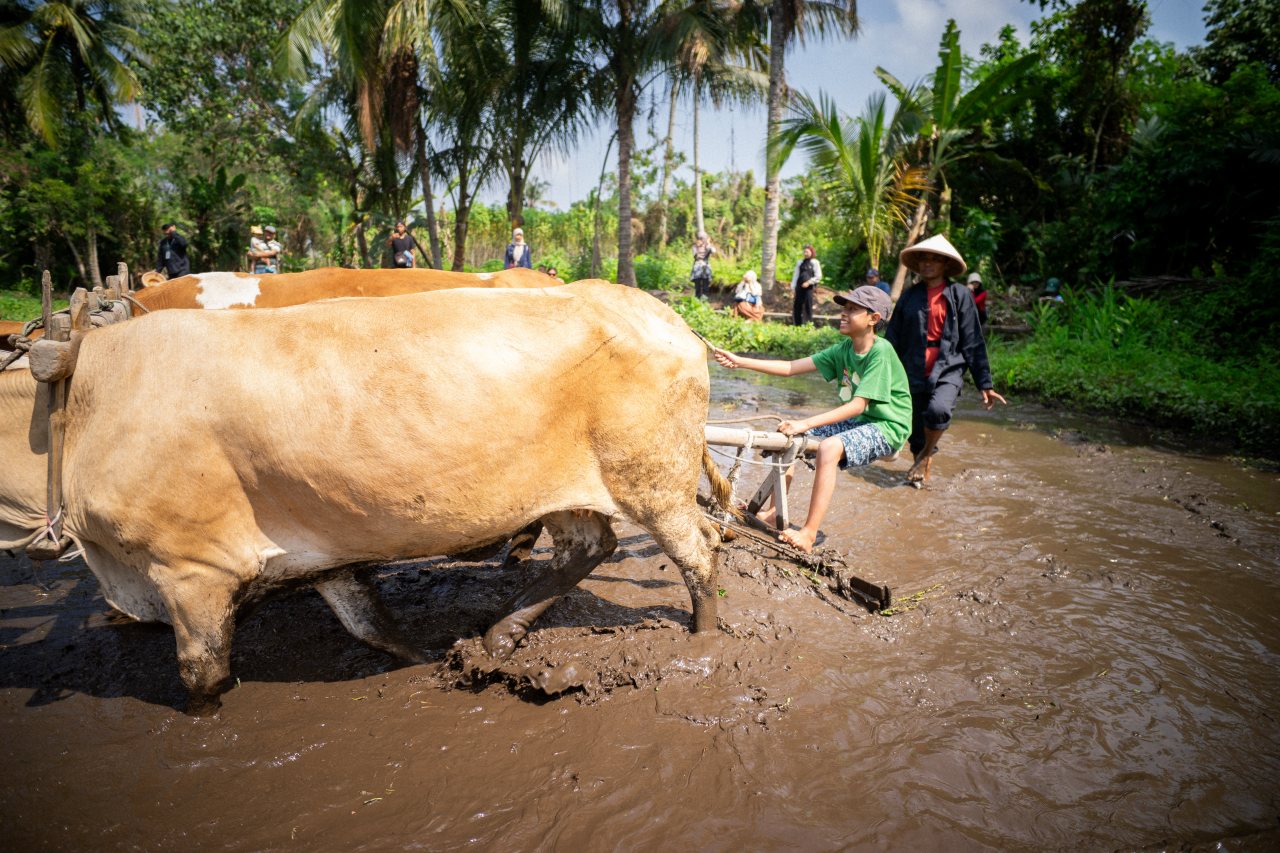
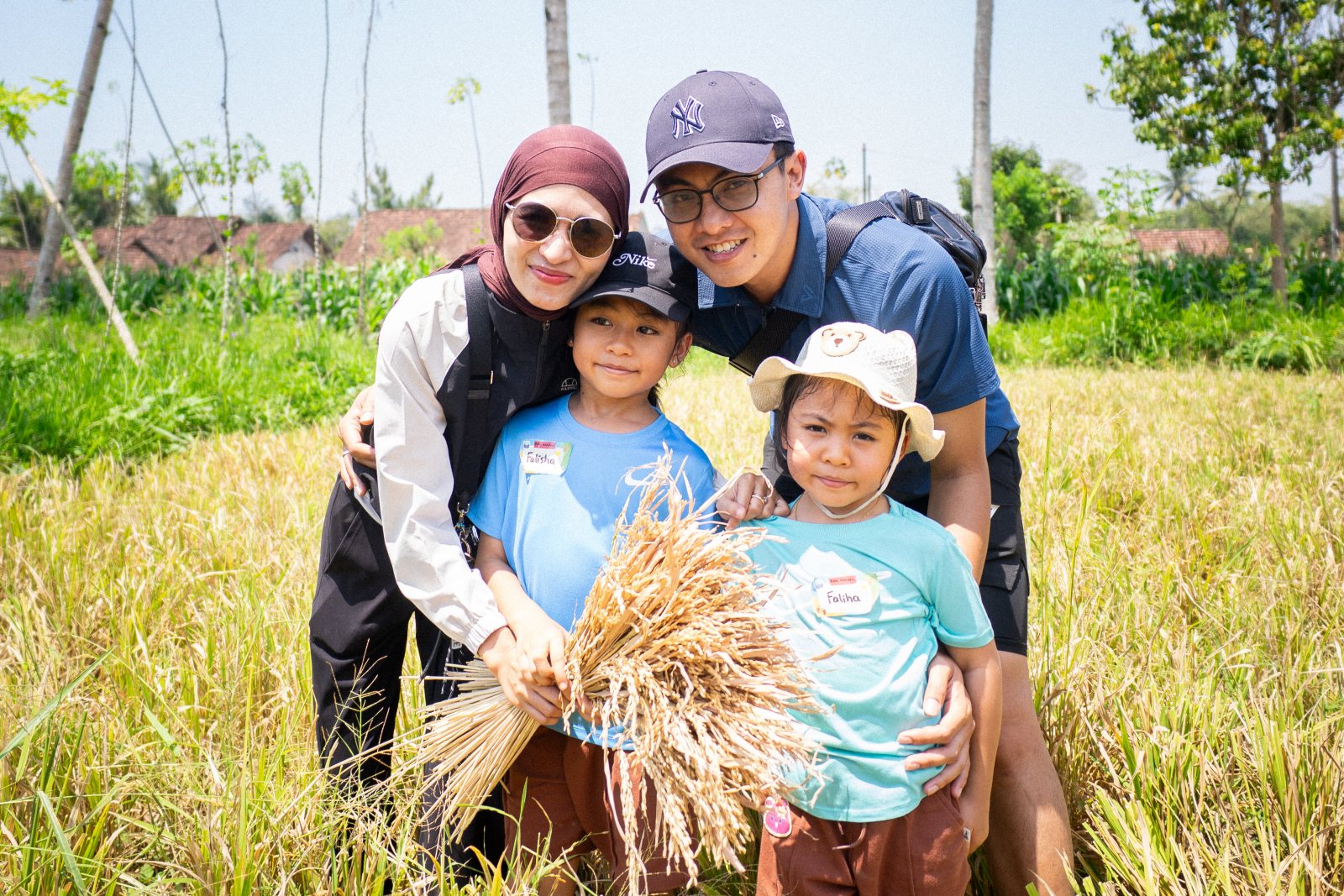
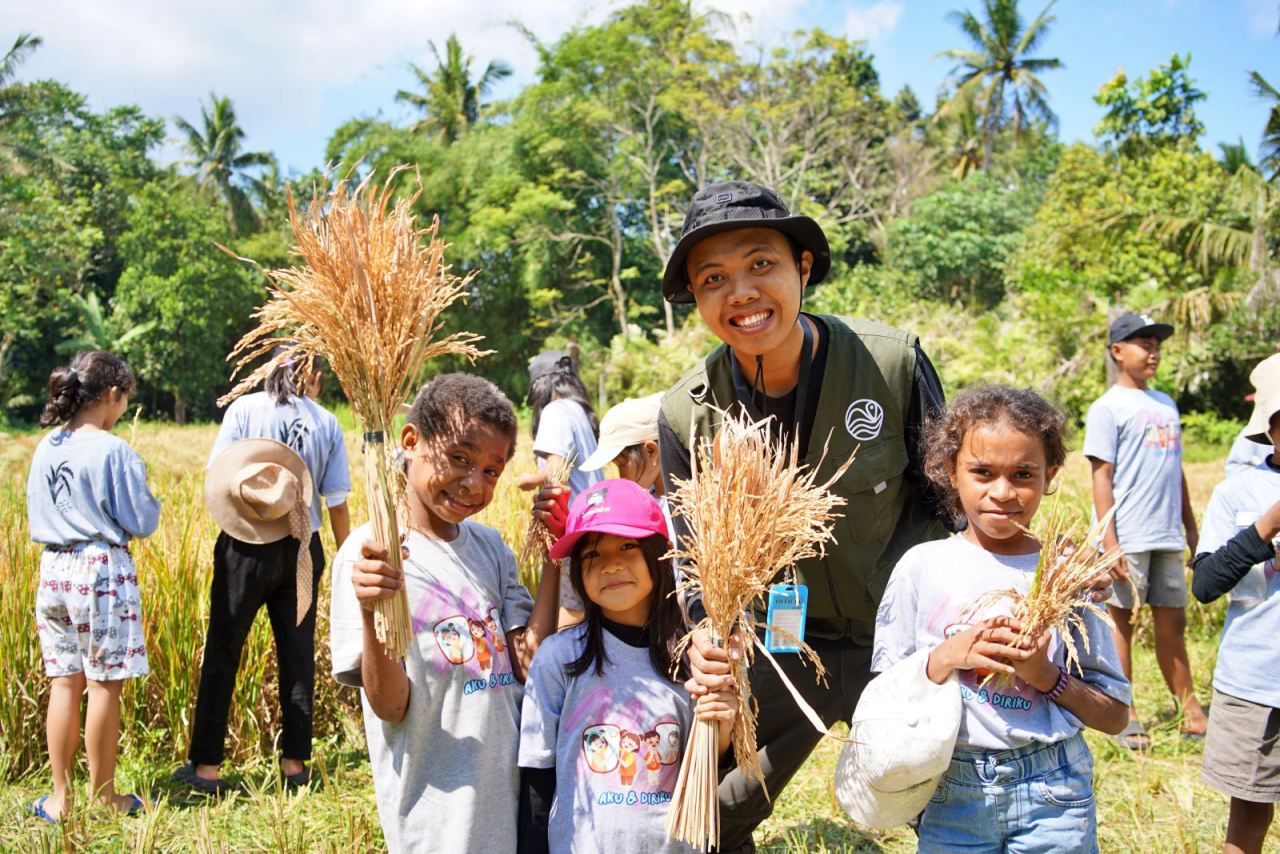
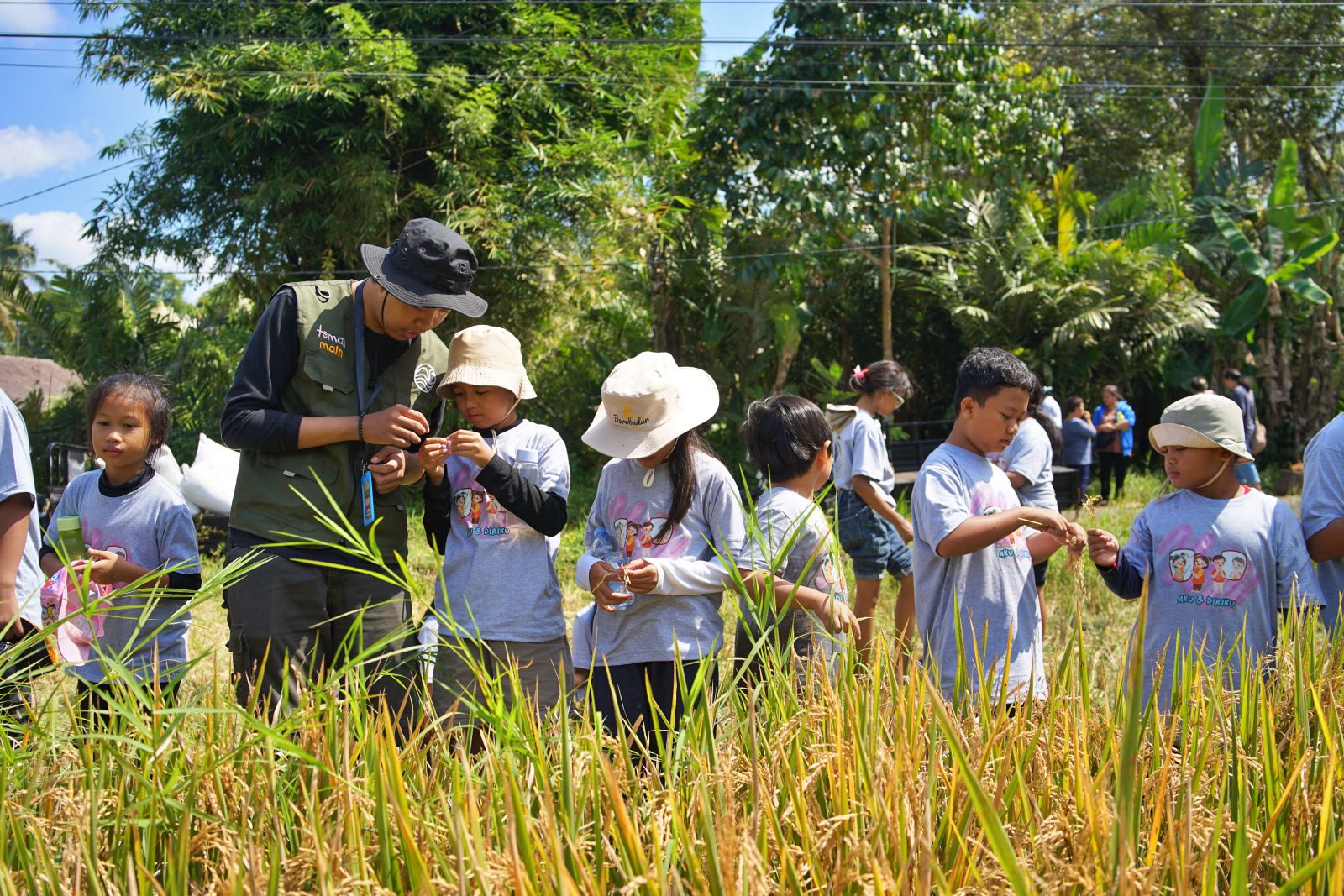
When their feet touch the muddy rice field, their hands try planting rice seedlings, or their eyes see rows of rice turning golden, children are learning through direct experience. Something they may have only seen in books or pictures suddenly becomes something they can see, touch, and experience with their own senses.
From there, questions naturally begin to emerge. “Why do we need to plant rice?”, “How long does rice take to grow?”, or “Where would our food come from if there were no farmers?”
Simple questions like these are an important part of learning. Children are not simply receiving answers from adults; they are learning to observe, ask questions, and develop their own curiosity about the world around them.
Discovering the Long Journey Behind Every Meal
In a time when food can be bought and delivered so easily, children may have fewer opportunities to see how food is actually produced. They know rice as something that is always available at home and vegetables as something that can simply be bought at the market.
But before reaching the dining table, every food has a journey. There is planting, growing, caring, harvesting, processing, and finally preparing the food we enjoy.
Agricultural experiences help children see this connection more clearly. They begin to understand that food is part of a much bigger journey involving people, nature, knowledge, time, and hard work.
Children also learn that not everything can happen instantly. A seed does not become a plant immediately after it is planted, and rice cannot be harvested the next day.
There is a process to follow, time to wait, and a plant to care for. Through this experience, children can learn about patience, persistence, and the importance of respecting the process.
These lessons may seem simple, but they are closely connected to everyday life. Children begin to understand that something meaningful often takes time, effort, and care before it can finally be enjoyed.
Learning to Appreciate Farmers and Nature
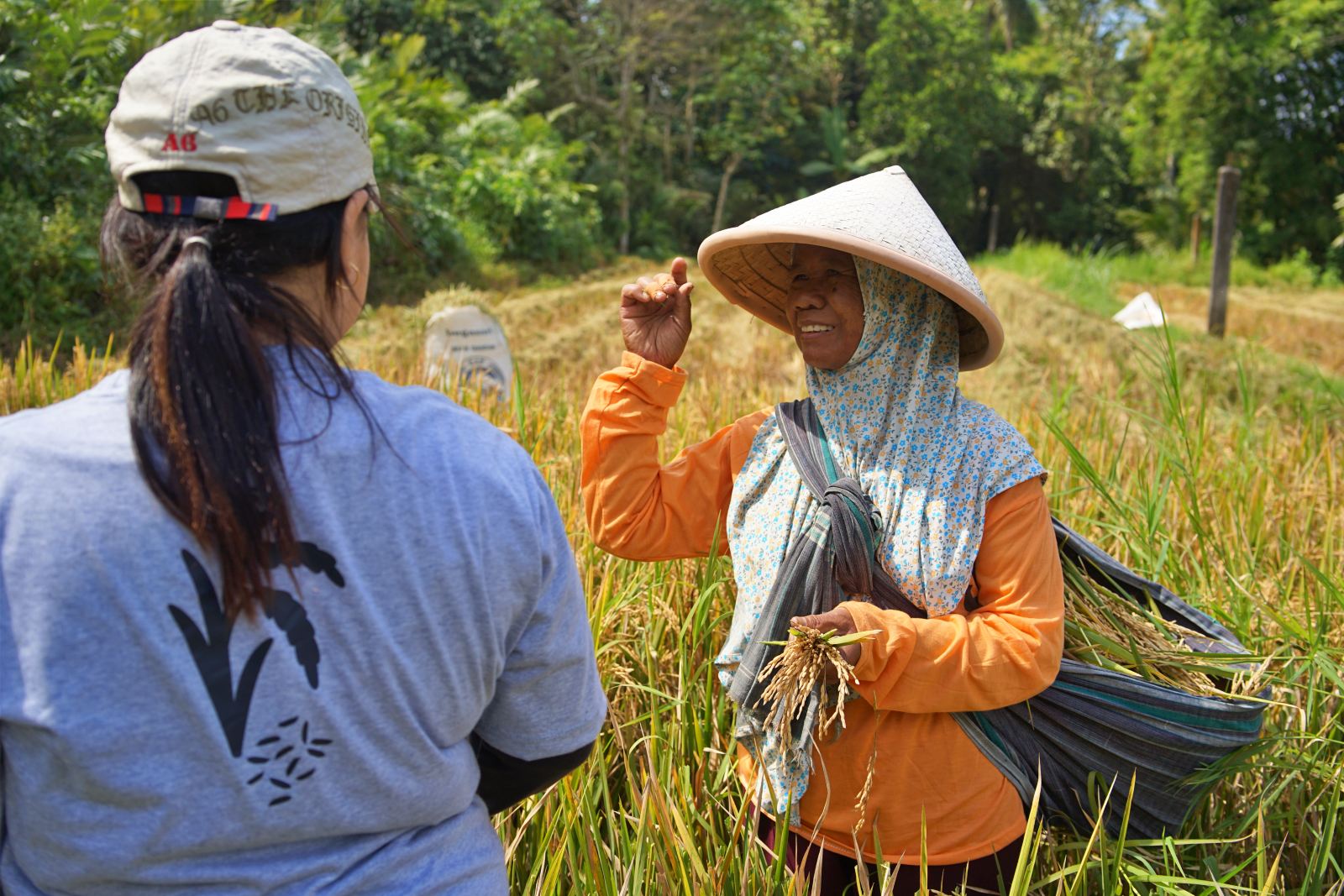
A visit to a rice field can also introduce children to people who play an important role in our everyday lives: farmers. Children may know rice as food, but they do not always know who works behind the process of producing it.
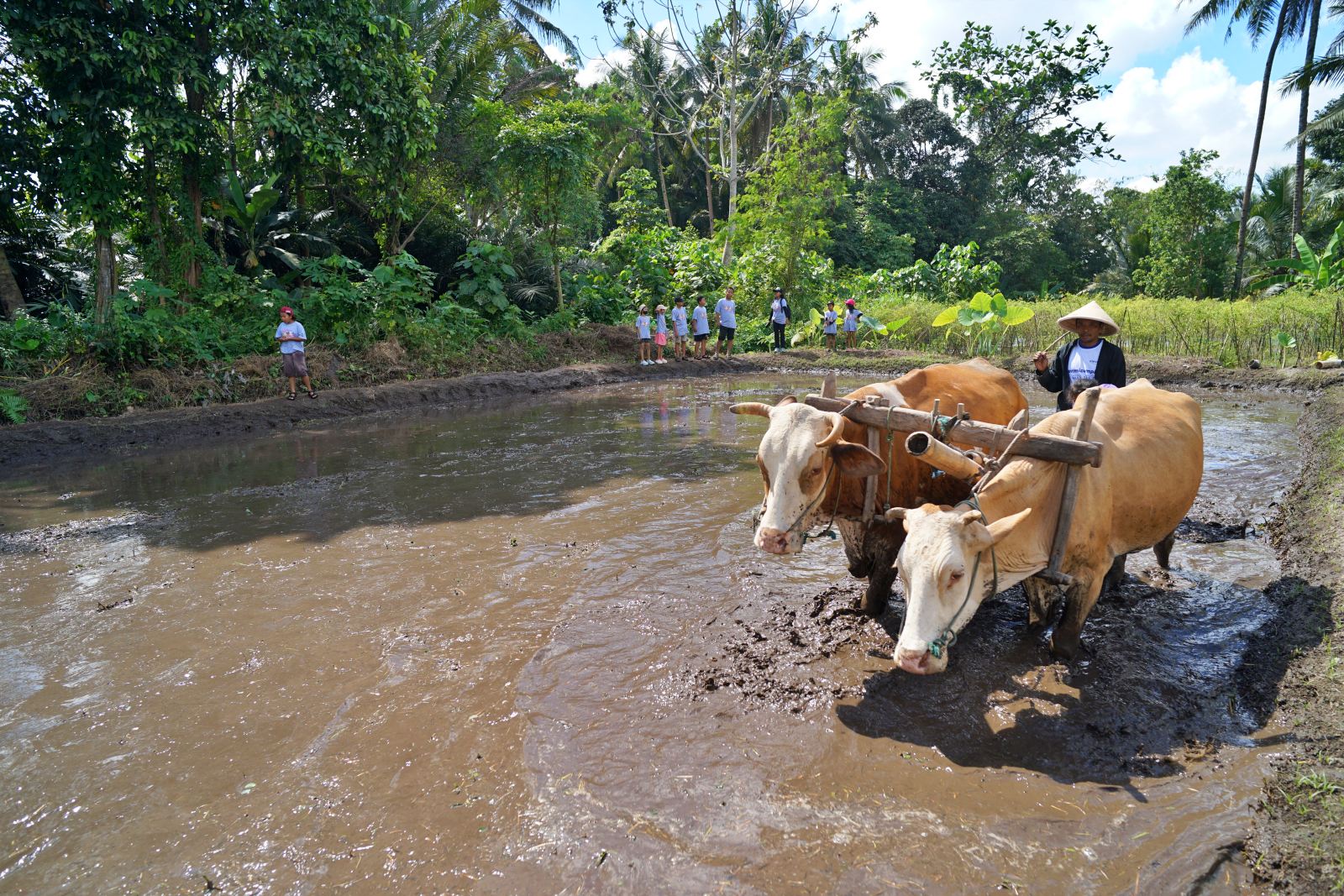
In the rice field, children can see how the soil is prepared, seedlings are planted, crops are cared for, and rice is harvested. Through this experience, they begin to understand that the food on their dining table is the result of the hard work of many people.
They can begin to see that every food has a process and people behind it. It is not only about rice growing in a field, but also about people working together with nature to produce food.
A rice field is also more than a beautiful green landscape. It is a living system where soil, water, plants, animals, people, and changing seasons are all connected.
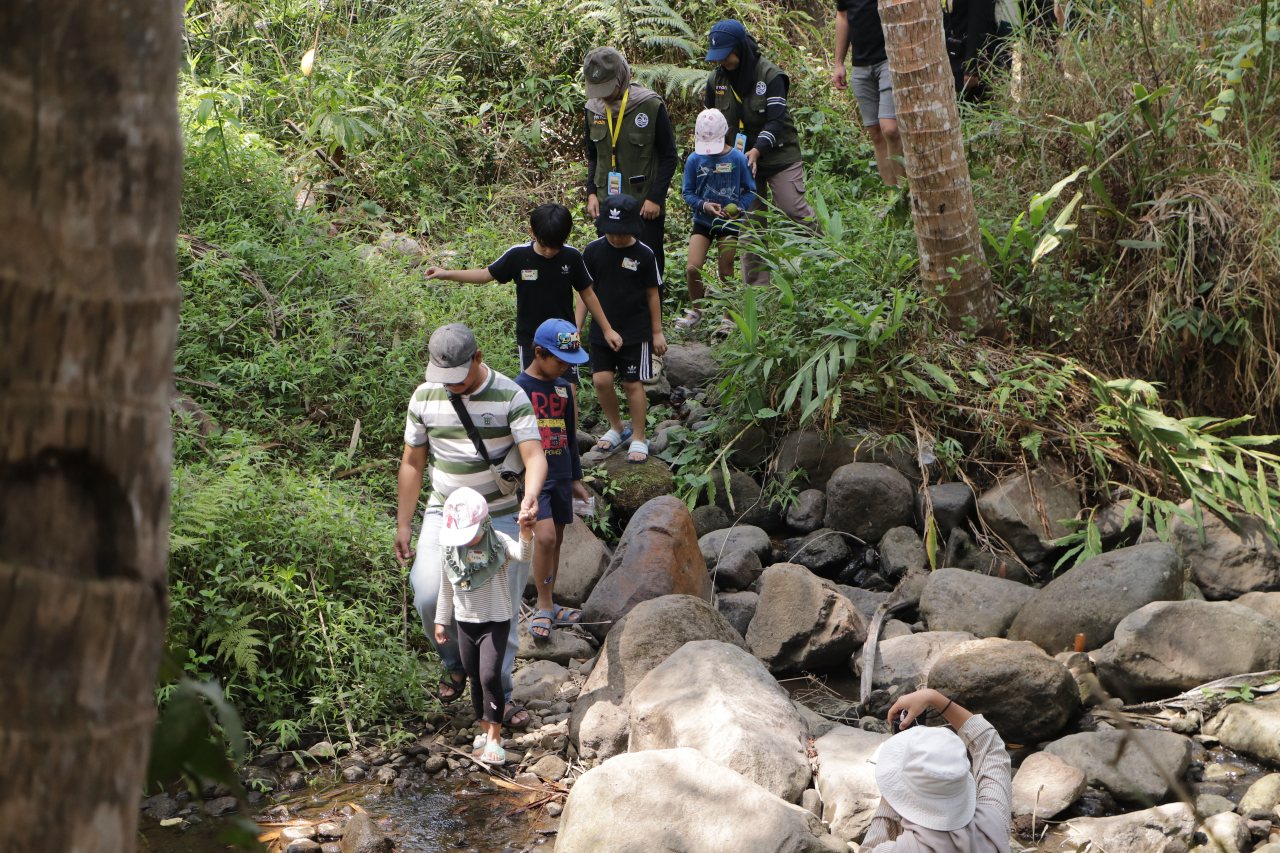
That is why nature-based educational trips for children can be such meaningful learning experiences. Children are not only playing and exploring outdoors; they are also learning about the relationship between people and the environment that supports their lives.
When children understand where their food comes from and how nature helps provide it, caring for the environment can become more natural. They begin to see that protecting nature is not something distant from everyday life, but something directly connected to the food they eat.
From the Rice Field, Learning Not to Waste Food
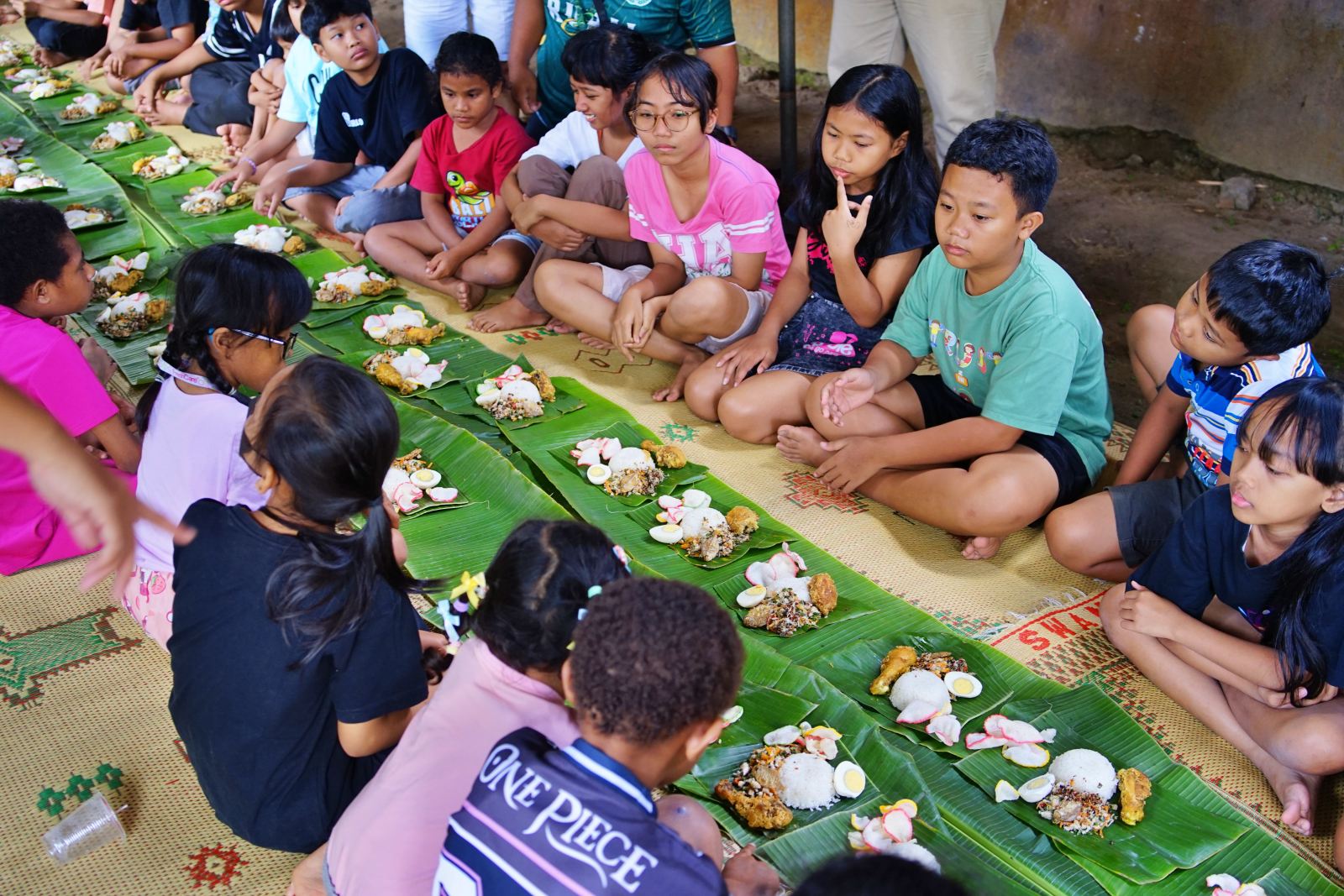
One of the most important lessons children can learn from understanding the journey of food is how to appreciate what they eat. When children see for themselves how rice is planted, cared for, and harvested, they may begin to look at the food on their plate in a different way.
Imagine a child who has felt the mud beneath their feet, tried planting rice, met a farmer, and learned how long it takes for rice to grow. When they return to the dining table, perhaps that simple plate of rice no longer feels quite so ordinary.
They begin to understand that food is the result of time, energy, knowledge, cooperation, and nature. This understanding can become a foundation for developing the habit of not wasting food.
The habit can grow from a deeper understanding. Not simply because parents ask their children to finish their meals, but because children begin to understand why food deserves to be valued.
This is one of the meaningful benefits of introducing children to the journey of food. A simple experience in a rice field can help children build a closer connection with the food they eat every day.
When a Rice Field Becomes a Classroom
Learning does not always have to happen inside a classroom. A rice field can become a learning space where children meet nature, agriculture, local communities, and experiences that are difficult to gain from explanations alone.
A rice field teaches children that living things need time to grow. Agricultural activities introduce patience and careful observation, while meeting farmers helps children appreciate the hard work of others.
The journey from planting to eating also helps children understand the relationship between people, nature, agriculture, and food. This is why learning in a rice field can become an educational experience that is both enjoyable and meaningful.
Children may come home with muddy feet, dirty clothes, and plenty of stories to tell their parents. More importantly, they also bring home questions, experiences, new knowledge, and a different perspective on the food they have enjoyed every day.
Experiences like these remind us that learning does not always have to begin with a book or a long explanation. Sometimes, children understand something more deeply when they are given the opportunity to see it and experience it for themselves.
Taking Children on the Journey of a Grain of Rice
Through The Journey of a Grain of Rice, Teman Kecil are invited to discover the journey of food through direct experience. Children do not simply see a rice field from a distance; they are introduced to the lives of farming communities and the process that takes place before rice becomes part of a meal.
Along the journey, children can take part in activities in the rice field while learning about agriculture and the environment. It becomes a space to introduce patience, teamwork, gratitude, appreciation for farmers, care for nature, and the importance of not wasting food.
Because sometimes, understanding the meaning of food requires more than simply seeing it on a plate. Children need to know where it comes from and the people who are part of its long journey.
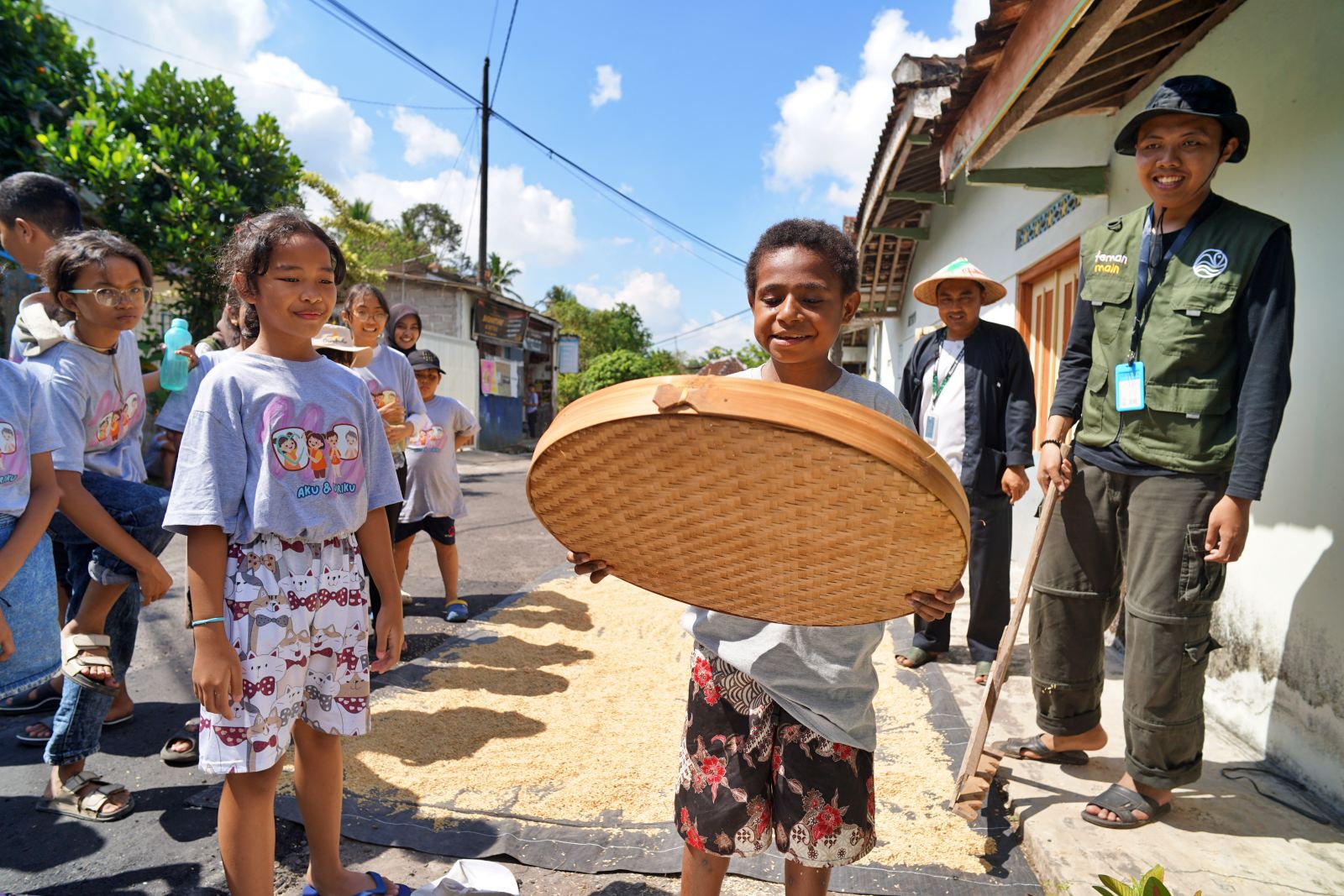
From the soil and the rice fields to the hands that plant and care for the crops, there is so much for children to discover. This journey can make every bite feel like more than just food—it becomes part of an experience and a lesson they can carry home.
Because when children understand the journey of food, they are not only learning about what they eat. They are also learning to appreciate nature, farmers, and the process behind the food they enjoy every day.
Written by: Dimas Alfareza